
Blog

  • Beer Novices?

    The title is a bit of a play on words. In truth, many of the attendees knew exactly what they liked when it came to beer. But recently, I had the pleasure of starting a men’s social group called Beer and Friendship.

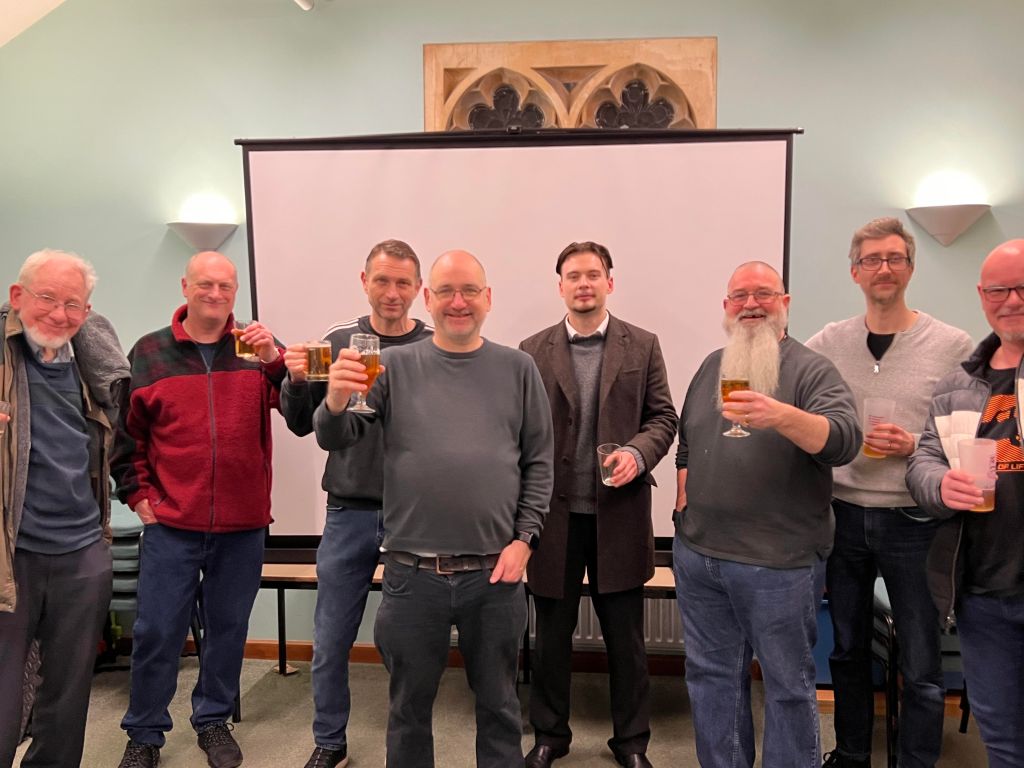
    After volunteering to lead the group and proposing an informative evening of tastings, I was pleasantly surprised by the enthusiasm of 20–30 attendees—some even agreed to be photographed (see below).

    My mind raced… Where do I start? What do I want to talk about? And at what level should I pitch it?

    In the end, I put together a varied agenda covering topics such as:

    • Beer and history
    • Ingredients and hops
    • The brewing process
    • Local beer-related tales
    • Beer and religion
    • An analysis of British beer styles
    • The impact of water on brewing

    Here are the tasters (below)—and to round off the evening, we enjoyed a Hogs Back Surrey Nirvana (or two!) while socialising.
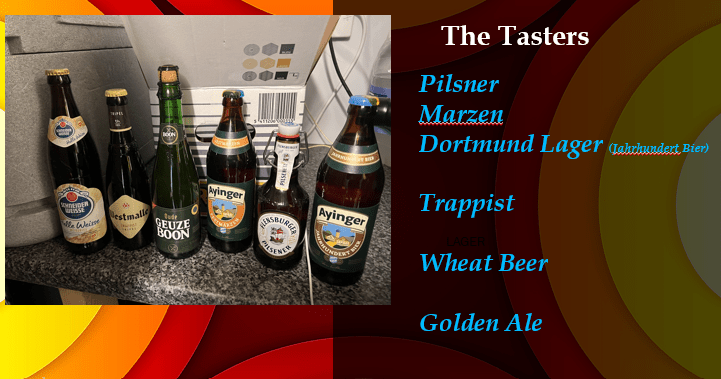
    Bringing the Beers to Life

    My brother Jon helped pour out the tasters, while my younger brother Adie brought along some cider—just in case my selection wasn’t to everyone’s taste (between us, we make a great team). I could see the doubt in Jon’s eyes:

    “Phil, really? You like real ale—what’s this lager stuff doing here?”

    Well, as it happens, I do love real ale—but in the UK, lager often gets a bad rap. This is largely because the lagers typically found on tap here bear little resemblance to the crisp, flavourful Pilsners enjoyed elsewhere in the world. I wanted to give the group a chance to explore the differences between lagers and ales, learn how they’re made, and ultimately form their own opinions—based purely on taste.

    The experiment worked, and I suspect there will be plenty of Good Beer Guide pub visits ahead—so watch this space for future write-ups!

    Here’s to good beer, good company, and more pub adventures ahead.
  • Pints, Pitfalls, and Prospects: A Beer Lover’s Day Out in Exeter

    Exeter: A Beer Adventure

    The evening before our adventure, and with the Good Beer Guide (2025 edition) in hand, my brother and I planned a leisurely walk around Exeter, using Exeter Central train station as our starting point.

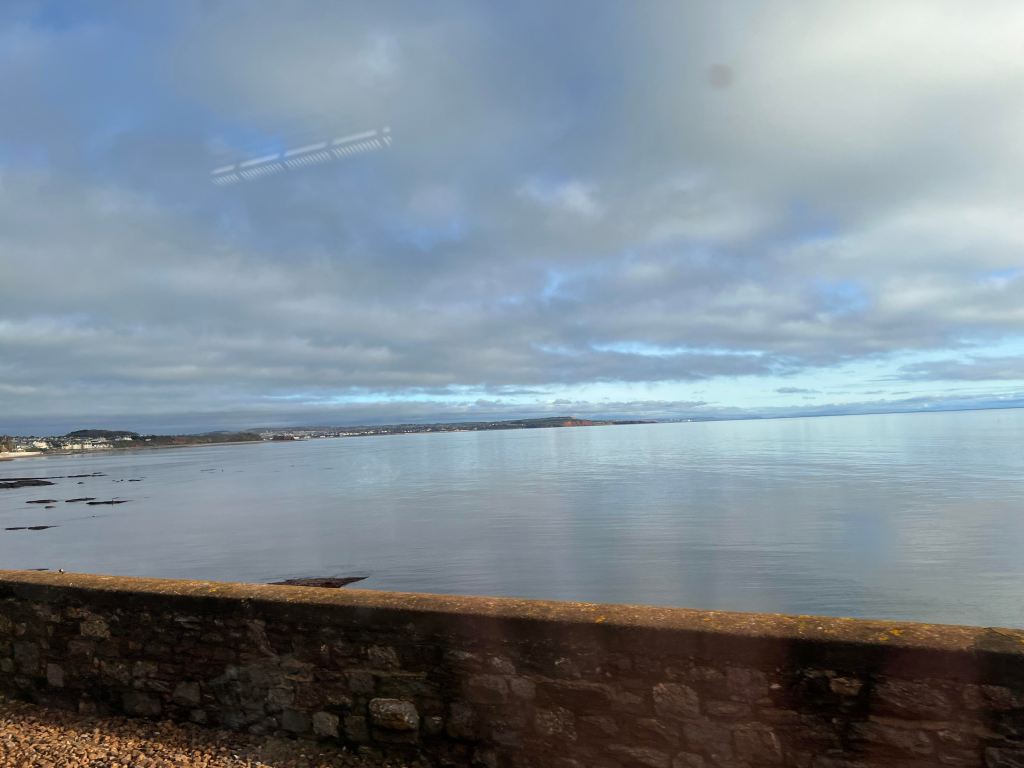
    The Exter to Paignton Line serves the stretch of the train journey we needed to get from Newton Abbot to Exeter. The train journey itself was a delight—my first time experiencing the breathtaking Dawlish sea view from the carriage window.

    When Things Go Wrong

    Our first stop was one of the pubs listed in the Good Beer Guide (GBG), but it didn’t live up to expectations. I won’t name the establishment here—things can go awry, and the life of a landlord is far from easy—but I left my pint unfinished, disappointed.

    The tasters seemed fine, if unremarkable, so we confidently ordered our beers and settled in. But what went wrong?

    Dispense is, in my opinion, the hardest part of serving real ale. Keeping three or four perfectly conditioned beers on tap week in, week out is no mean feat, and those that manage it deserve a round of applause. GBG pubs are often those rare gems that consistently achieve this standard, with real ale fans voting them in—discerning drinkers who won’t tolerate subpar pints.

    Yet a small taste may not always reveal a beer’s full body, complexity, or flaws. It’s a reminder that the perfect pint can sometimes be elusive.

    Factors That Affect Beer Quality

    Several variables can impact the quality of your pint:

    • Beer Lines: If the beer lines are lengthy, you might get the last dregs from the barrel, which can be flat or oxidised.
    • First Pull of the Day: If you’re the first customer of the day, the beer sitting in the line might be warmer and less conditioned than ideal.
    • Staleness: Cask ale starts to stale once oxygen enters. After five or six days, you may detect a vinegar-like tang.
    • Cloudiness: If the cask has been disturbed, you might get a pint with sediment—dead yeast, hop particles, or other insolubles.

    Adjusting Plans

    With the other GBG pubs yet to open (a glaring oversight on our part), we ventured into town for our own reconnaissance. We ended up drinking Hanlon’s beers, primarily Yellow Hammer and Santa’s Hammer—both kept well.

    Hanlon’s, a Devon brewery, began brewing in Vauxhall, London, in 1995 before relocating to Devon in 2000—perhaps trading urban hustle for rural tranquillity?

    By the quay, we found two charming spots with excellently kept beers. One stood out as the hero of the day.

    The Prospect Inn

    Once called The Fountain Public House (1823), this pub adopted its current name, Prospect Inn, in 1956. According to Exeter Memories, Frank and Alma Ward won the pub in a competition, with none other than actress Diana Dors handing over the keys!

    The pub’s history is as colourful as its views, including an 1862 caution to the landlord to “conduct it in a better manner.” These days, it’s a food-focused venue, but we were warmly welcomed without any pressure to dine.

    The beers were immaculate, the atmosphere inviting, and the décor delightful. Regrettably, I didn’t snap any photos.

    So what did we learn?

    1. Check Opening Times: Avoid the heartbreak of shuttered doors.
    2. Timing is Everything: Find out when the pub opened that day—early pours may suffer from less-than-ideal conditions.
    3. Ask Around: Observe the locals. What are they drinking? A quick chat might reveal the pub’s most popular or best-kept beers.

    Exploring Exeter proved to be an adventure of discovery, and while not everything went to plan, the day was saved by quality beers, good company, and a dose of local history. Cheers to that!

  • A Twixmas Pub Crawl in Plymouth

    (Again with my brother Jon).

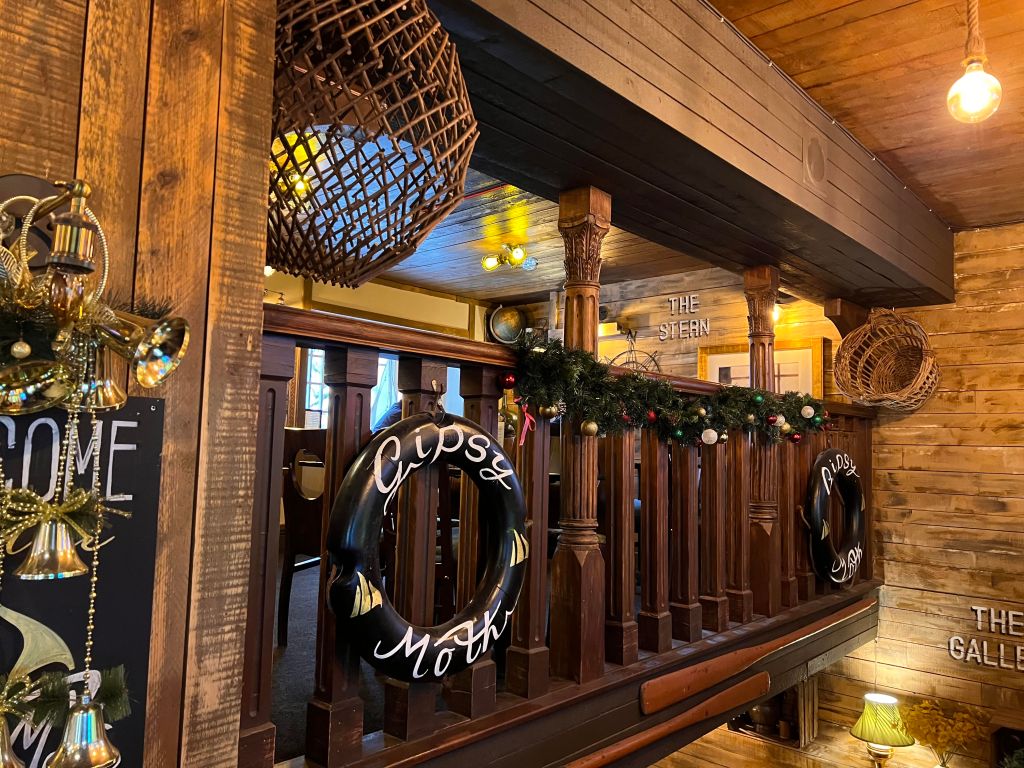
    Gypsy Moth
    From Plymouth train station we walked just under a mile in the direction of Plymouth Hoe to get to the Gypsy Moth (Pictured above). Named after a Yacht which was sailed single-handedly around the world in the sixties, it is not surprising perhaps to hear that the innards of the pub are decked out like a ship. The decor, ambiance and pint of St. Austell Tribute didn’t disappoint.

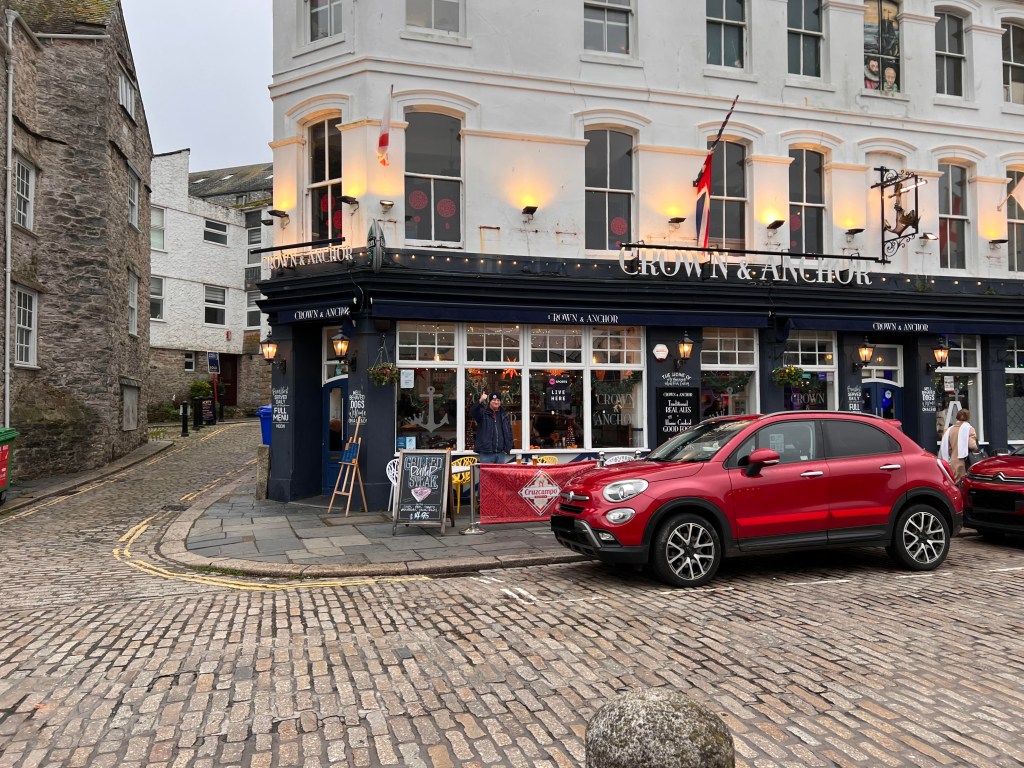
    Crown and Anchor
    Next up – we visited the Crown and Anchor. While it may not be the prettiest pub, we enjoyed it enough to return for a second visit. Its selection of beers from Salcombe Brewery provided a refreshing change from the malt-forward brews typically found in the region.

    During one visit, I was asked at the bar to recommend a beer closest to a ‘bitter.’ I suggested the Shingle Bells at 4.2% ABV as a reasonable approximation, though the 4.4% ABV Sea Horse was more akin to a best bitter. It was a fun moment of sharing beer knowledge in an unexpected setting.

    In all honesty, the lines can get a bit blurred. Pale Ale, a top-fermented style of beer, was first brewed in England—perhaps as early as 1630, and certainly by 1760, according to Terry Foster in his book Pale Ale. Foster notes that when his book was published, some beers labelled India Pale Ales (supposedly stronger to survive long transportation to India) were actually weaker than some Pale Ales. He also observed 30 bitters with gravities ranging between 1.050 and 1.070.

    For my part, I define these styles as follows: a bitter is a moderately hoppy, top-fermented beer with an Original Gravity (O.G.) between 1.035 and 1.043. A best bitter is similar but with an O.G. of 1.044 to 1.050. I classify an IPA as having an O.G. of 1.050 or higher, but it must also be distinctly hop-forward. Pale Ale, meanwhile, serves as the overarching ‘type’ that encompasses all of these variations – But that’s just me.

    Anyhow – the barmaid seemed to appreciate my help jokingly asking if I could stay there all day.

    The Three Crowns
    The three Crowns was next, and although pleasant enough, we found it to be the more expensive of the pubs.

    The Dolphin Inn
    After that, we headed to the Dolphin Inn—a fantastic pub steeped in history. It’s full of Navy memorabilia, and the pint of Tribute I had didn’t disappoint. This pub has a fascinating backstory, with associations to the Tolpuddle Martyrs, a feature in a BBC animated comedy, and even its own Wikipedia page (well worth a read). It also earned a spot in the 2025 edition of the Good Beer Guide.”

    Return to the Crown and Anchor
    We returned to the Crown and Anchor for another pint before finishing our journey at the Fisherman’s Arms.

    The Fisherman’s Arms
    Our final stop was the Fisherman’s Arms, where we enjoyed a meal and a pint of Dartmoor Legend. While the beer was more malt-forward than my palate usually prefers, it was still a pleasant pint. The pub also serves excellent food—I’d highly recommend the fish gumbo. This pub, too, is featured in the 2025 edition of the Good Beer Guide.

    My recommendations for pubs to visit in the Barbican area of Plymouth therefore would include the Gypsy Moth, The Crown and Anchor, The Dolphin Inn and the Fisherman’s arms. Admittedly we probably missed a few gems along the way however.

  • My Passion for Beer and the Importance of a Village local.

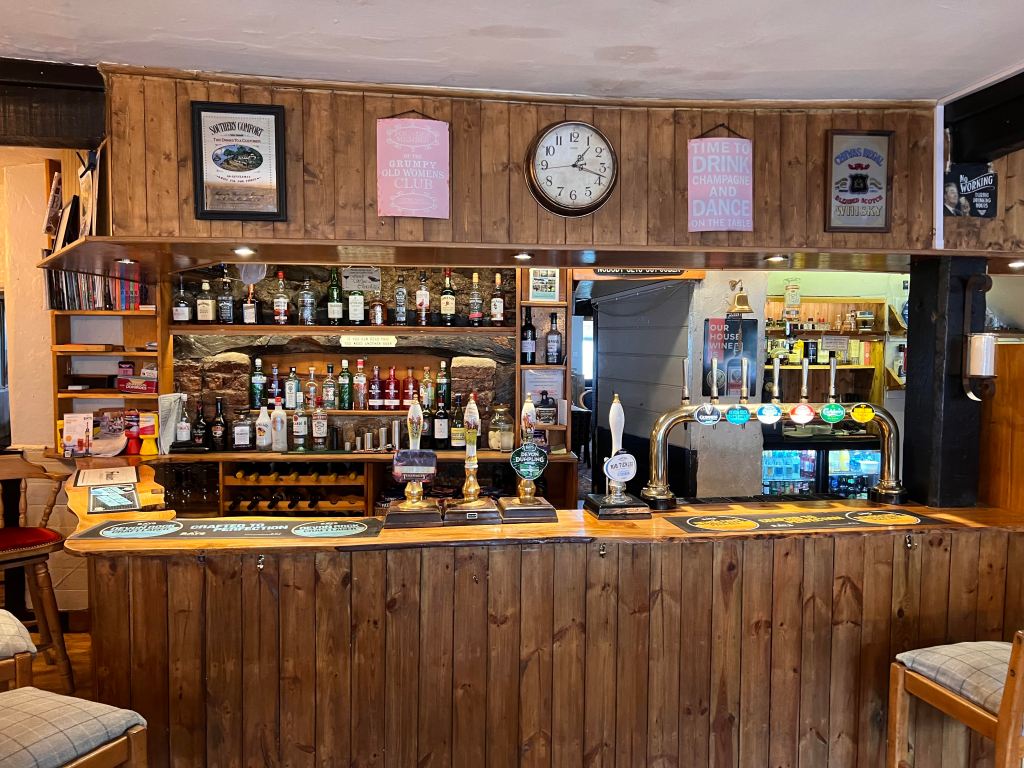
    Having walked two miles uphill with my brother Jon, we arrived at the perfect spot to kick off my beer blog. A roaring fire in the fireplace and warm, genuine smiles from the bar staff confirmed that I’d made the right choice. Let me introduce you to the Palk Arms, a 16th-century public house nestled in the charming village of Hennock, within Dartmoor National Park. Visit their website here.

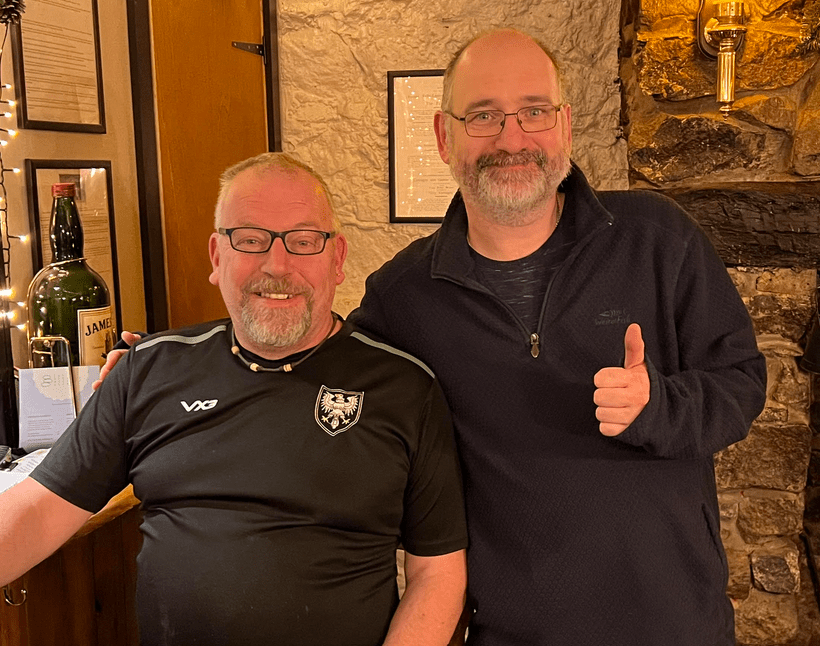
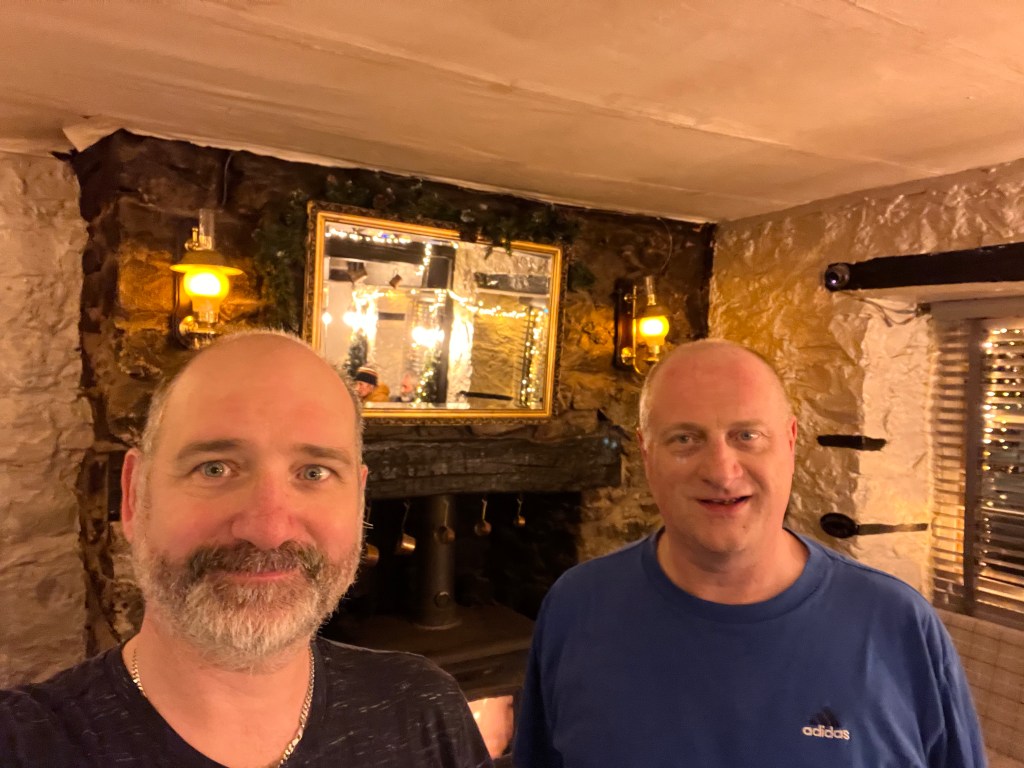
    The Palk Arms is run by Mike (pictured next to me in the photograph above), a man whose passion for beer rivals my own. He plans to transform the pub into a brewpub in 2025, presumably to complement the two perfectly kept real ales already on offer. Mike’s expertise in brewing far exceeds mine. While I’m content to brew for personal enjoyment, Mike is embarking on his second commercial brewing venture. His first, Platform 5 Brewery, was located beneath the Railway Brew House in Newton Abbot. Reflecting on his past, Mike shared: “One to two barrels is enough for me. I don’t really want to brew for anyone else.”

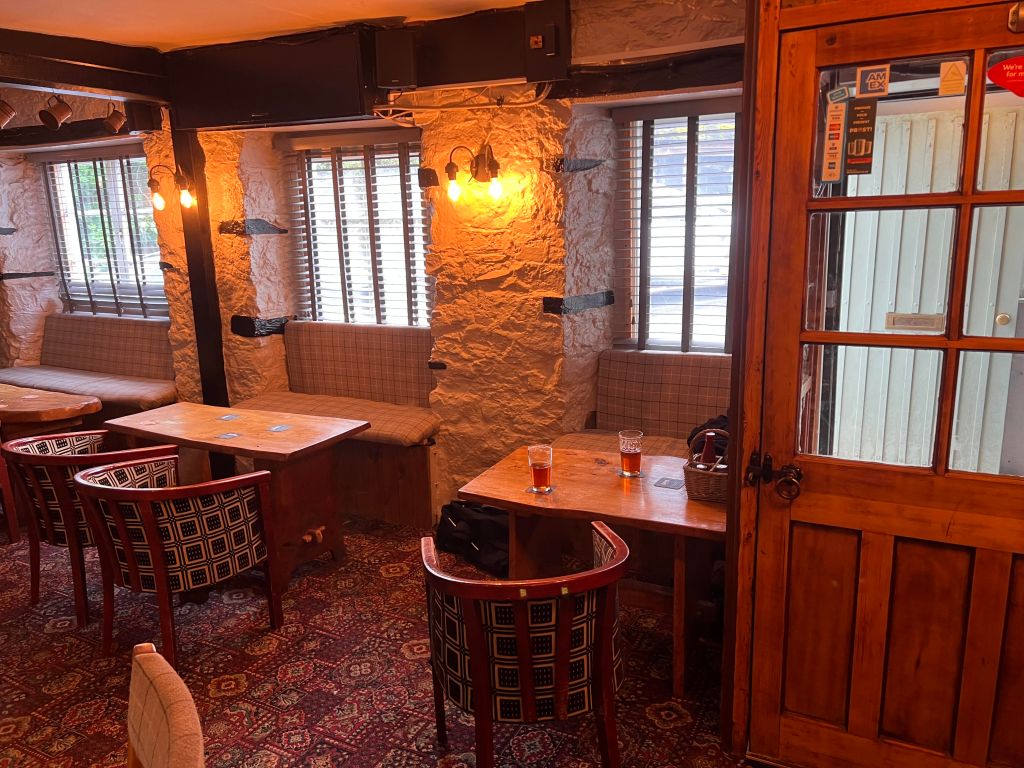
    This visit marked only my second time at the Palk Arms, but Mike recognised me from my first visit three months earlier and kindly allowed me to take photos for the blog. The pub’s quirky charm shone through in little touches, like signs proclaiming, “If you can read this, you need another drink” and “Nobody gets out sober”. Above all, it’s clear that the Palk Arms is a haven for connoisseurs of fine beer and cider.

    During our brief stay, my brother and I couldn’t help but notice the vibrant sense of community. Tables were quickly refilled as patrons came and went, using the pub as a meeting place for friends, a hub for warmth and conversation, and even a spot for the occasional gossip. Chef Steve Taylor’s modest yet enticing menu of freshly cooked dishes added to the welcoming atmosphere. What struck me most, though, was the mix of ages among the clientele—proof that this pub is cherished by locals of all generations. For the villagers of Hennock, the Palk Arms must feel like a rare pearl.

    Two days later, I shared my impressions with members of St. Mary’s Church in the village, and they wholeheartedly agreed. The Palk Arms isn’t just a pub; it’s an essential part of the community.