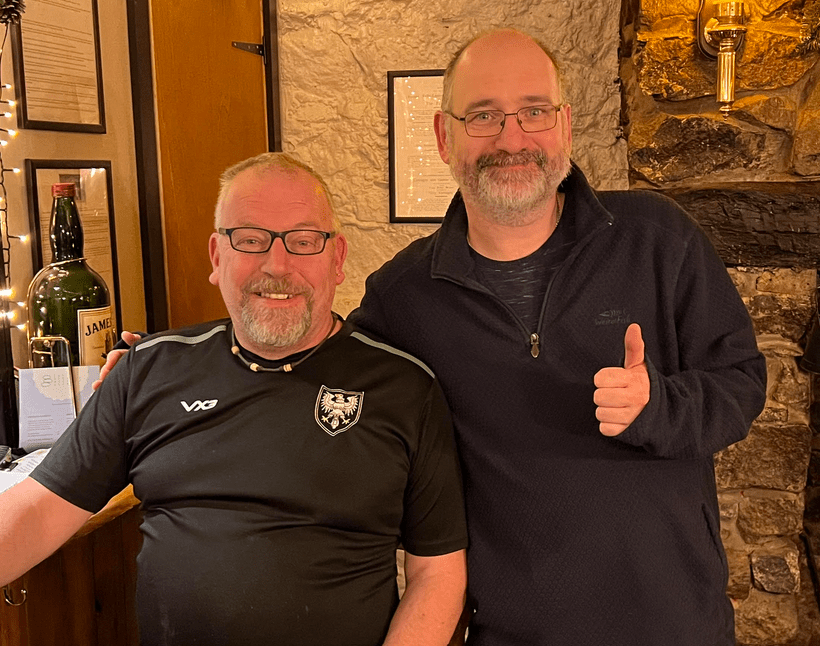
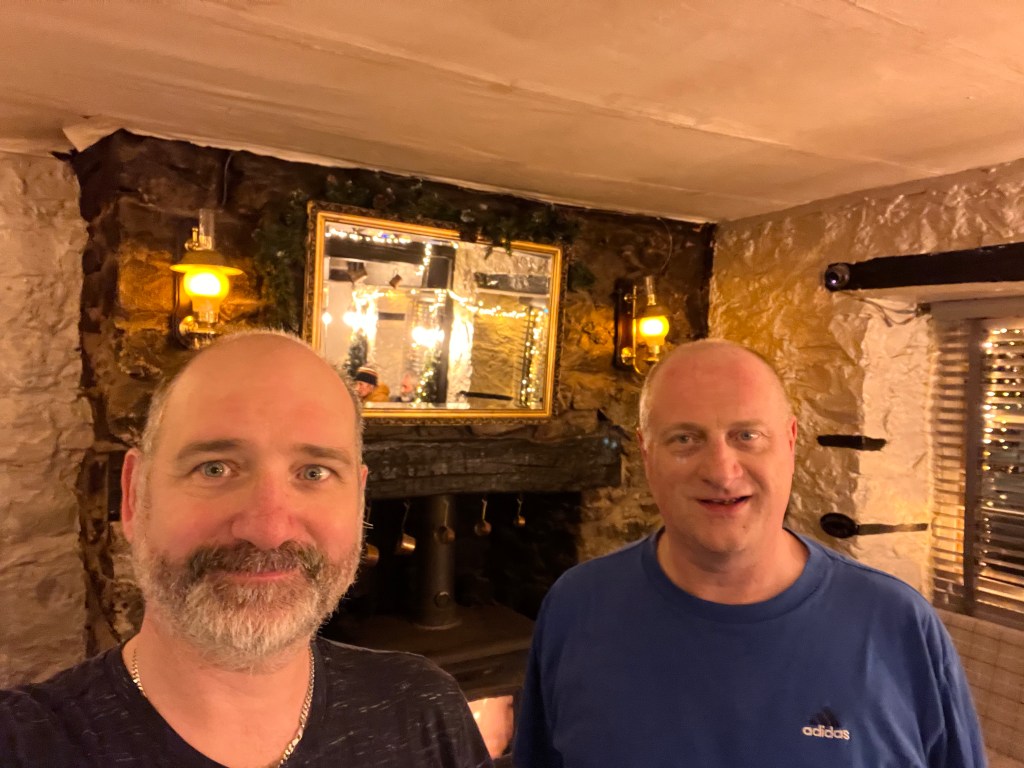
(Again with my brother Jon).
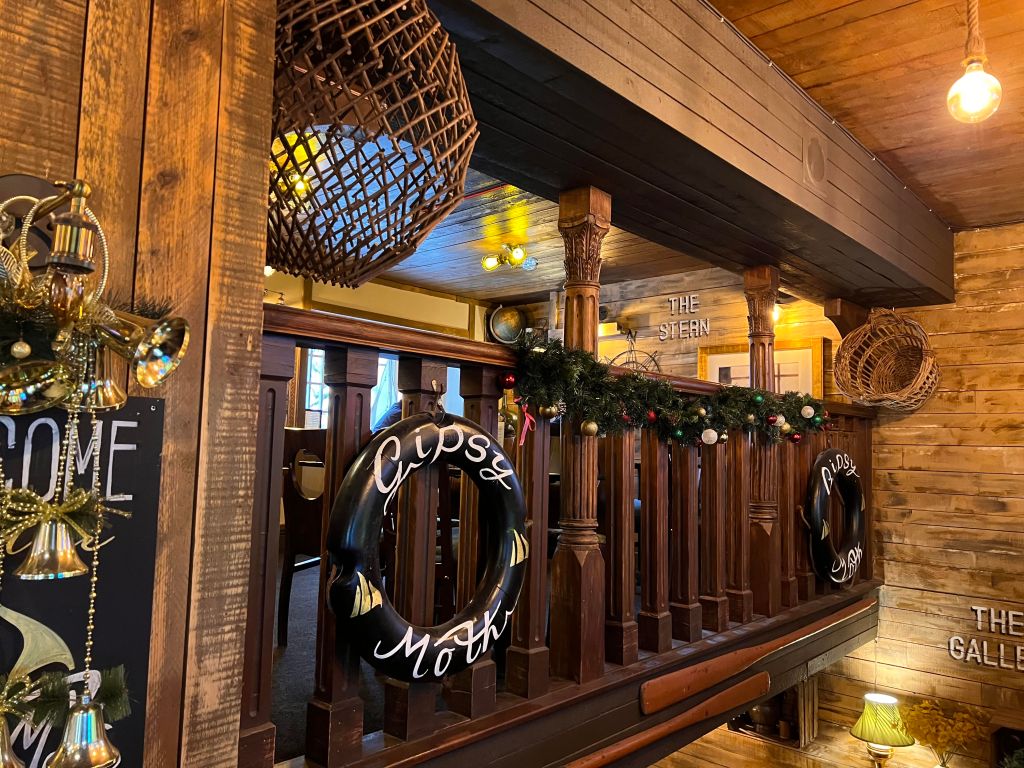
Gypsy Moth
From Plymouth train station we walked just under a mile in the direction of Plymouth Hoe to get to the Gypsy Moth (Pictured above). Named after a Yacht which was sailed single-handedly around the world in the sixties, it is not surprising perhaps to hear that the innards of the pub are decked out like a ship. The decor, ambiance and pint of St. Austell Tribute didn’t disappoint.
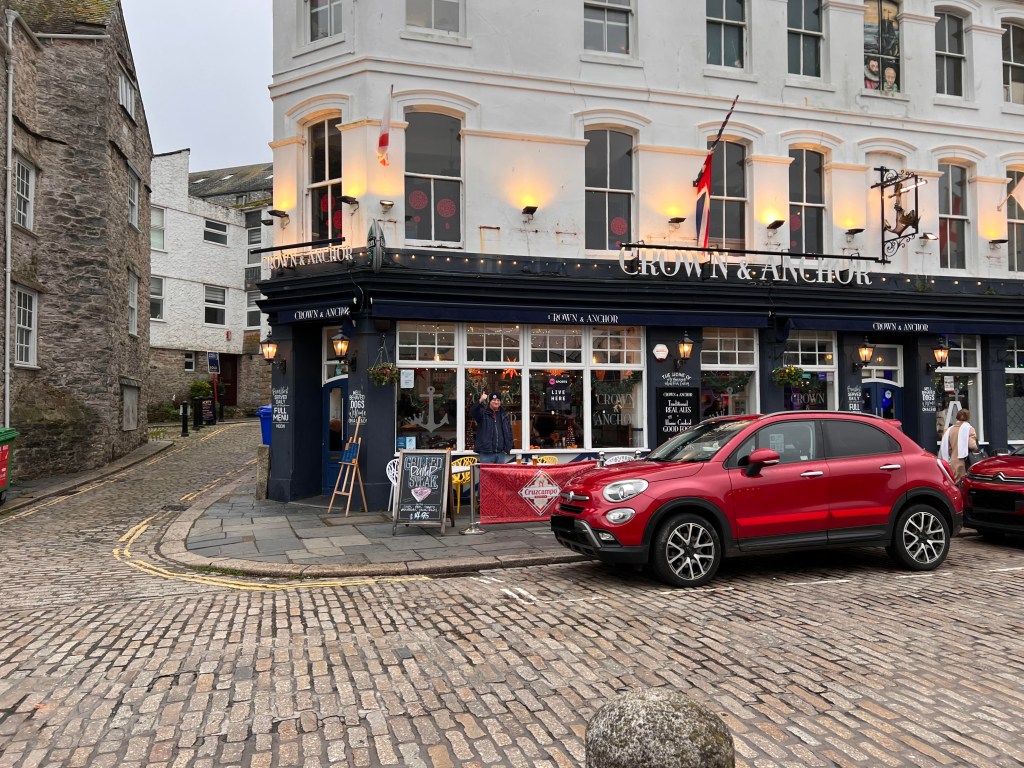
Crown and Anchor
Next up – we visited the Crown and Anchor. While it may not be the prettiest pub, we enjoyed it enough to return for a second visit. Its selection of beers from Salcombe Brewery provided a refreshing change from the malt-forward brews typically found in the region.
During one visit, I was asked at the bar to recommend a beer closest to a ‘bitter.’ I suggested the Shingle Bells at 4.2% ABV as a reasonable approximation, though the 4.4% ABV Sea Horse was more akin to a best bitter. It was a fun moment of sharing beer knowledge in an unexpected setting.
In all honesty, the lines can get a bit blurred. Pale Ale, a top-fermented style of beer, was first brewed in England—perhaps as early as 1630, and certainly by 1760, according to Terry Foster in his book Pale Ale. Foster notes that when his book was published, some beers labelled India Pale Ales (supposedly stronger to survive long transportation to India) were actually weaker than some Pale Ales. He also observed 30 bitters with gravities ranging between 1.050 and 1.070.
For my part, I define these styles as follows: a bitter is a moderately hoppy, top-fermented beer with an Original Gravity (O.G.) between 1.035 and 1.043. A best bitter is similar but with an O.G. of 1.044 to 1.050. I classify an IPA as having an O.G. of 1.050 or higher, but it must also be distinctly hop-forward. Pale Ale, meanwhile, serves as the overarching ‘type’ that encompasses all of these variations – But that’s just me.
Anyhow – the barmaid seemed to appreciate my help jokingly asking if I could stay there all day.
The Three Crowns
The three Crowns was next, and although pleasant enough, we found it to be the more expensive of the pubs.
The Dolphin Inn
After that, we headed to the Dolphin Inn—a fantastic pub steeped in history. It’s full of Navy memorabilia, and the pint of Tribute I had didn’t disappoint. This pub has a fascinating backstory, with associations to the Tolpuddle Martyrs, a feature in a BBC animated comedy, and even its own Wikipedia page (well worth a read). It also earned a spot in the 2025 edition of the Good Beer Guide.”
Return to the Crown and Anchor
We returned to the Crown and Anchor for another pint before finishing our journey at the Fisherman’s Arms.
The Fisherman’s Arms
Our final stop was the Fisherman’s Arms, where we enjoyed a meal and a pint of Dartmoor Legend. While the beer was more malt-forward than my palate usually prefers, it was still a pleasant pint. The pub also serves excellent food—I’d highly recommend the fish gumbo. This pub, too, is featured in the 2025 edition of the Good Beer Guide.
My recommendations for pubs to visit in the Barbican area of Plymouth therefore would include the Gypsy Moth, The Crown and Anchor, The Dolphin Inn and the Fisherman’s arms. Admittedly we probably missed a few gems along the way however.
 Pour Decisions